
Concrete guide
How to Remove Oil Stains from a Concrete Driveway
A step-by-step way to approach fresh and old oil stains on concrete, including what to avoid and when the stain may need professional cleaning or repair.
Published July 28, 2026 · 3 min read
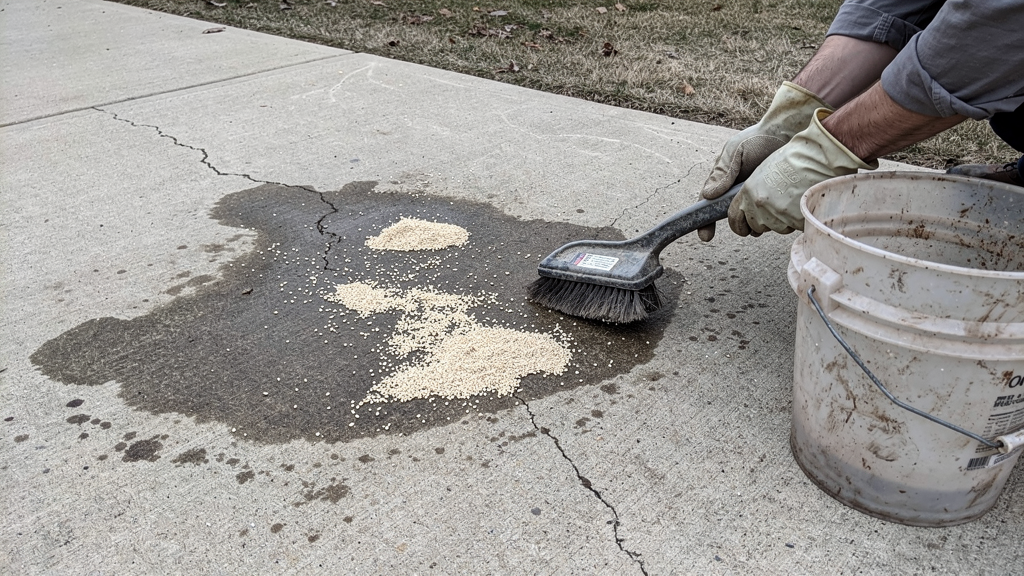
Oil stains are easier to reduce when you catch them early. Concrete is porous, so liquid can move into the paste and fine pores before the surface looks dry. Old stains may fade without disappearing completely, especially if oil has been tracked, heated, or repeatedly replenished by a vehicle leak.
Safety and setup first
Wear gloves and eye protection, keep children and pets away, and work in a ventilated outdoor area. Do not mix cleaners. Avoid sending oily rinse water into a storm drain or across a property line; collect or manage runoff according to local requirements.
What to gather
- Absorbent material such as clay-based absorbent, paper towels, or plain kitty litter
- A stiff nylon brush, not a wire brush that can scar the surface
- A concrete-safe degreaser or strong dish detergent
- A bucket, controlled amount of water, and a way to collect dirty runoff
- A plastic scraper for lifting absorbent material
A staged cleaning method
1. Blot fresh oil
Cover the wet area with absorbent material and leave it in place long enough to pull up liquid. Pressing or scrubbing immediately can spread the stain. Sweep or scrape the used material into a suitable container instead of washing it away.
2. Apply a cleaner
Follow the label for a concrete-safe degreaser. Work from the outside of the stain toward the center so you do not create a larger halo. Give the product the dwell time it needs; more product is not automatically better.
3. Agitate gently
Use a stiff nylon brush and short overlapping passes. A pressure washer can move loosened oil deeper into surrounding pores or spread contaminated water, so control the runoff first and use pressure cautiously.
4. Rinse and repeat
Lift the dirty solution, rinse with a controlled amount of water, and inspect only after the area dries. Older stains often need multiple cycles. Stop if the surface begins to lighten, roughen, or lose its finish.
| Stain condition | Best first move | What to expect |
|---|---|---|
| Fresh, small spill | Absorb, then clean | Good chance of meaningful reduction |
| Several days old | Degreaser and repeated dwell/agitation | May improve gradually rather than disappear in one pass |
| Dark, old, or repeated leak | Professional assessment or poultice-style treatment | Some shadowing may remain |
| Stain with surface damage | Clean and assess the concrete itself | Resurfacing or repair may be part of the solution |
What not to do
Do not pour gasoline, paint thinner, or other flammable solvents onto a driveway. Do not combine bleach, acids, ammonia, or unknown products. Avoid aggressive wire brushing and uncontrolled pressure washing. These shortcuts can damage the concrete, create fumes, or move pollution into the drainage system.
Prevent the stain from coming back
If the vehicle is leaking, cleaning the driveway without addressing the leak only resets the problem. Use a drip pan temporarily, repair the vehicle, and consider a suitable concrete sealer only when the surface is clean, dry, and appropriate for sealing.
For stains that have left a rough or spalled surface, see concrete repair or resurfacing and overlays. Call 414-219-1661 if you want help distinguishing a stain from deeper surface damage.
Need a second opinion on the concrete?
Call 414-219-1661 or send the details through the quote form below.