
Concrete guide
How to Fix a Sunken Concrete Patio
Understand why a patio settles, how to check drainage and movement, and which repair or replacement paths are worth comparing.
Published August 4, 2026 · 3 min read
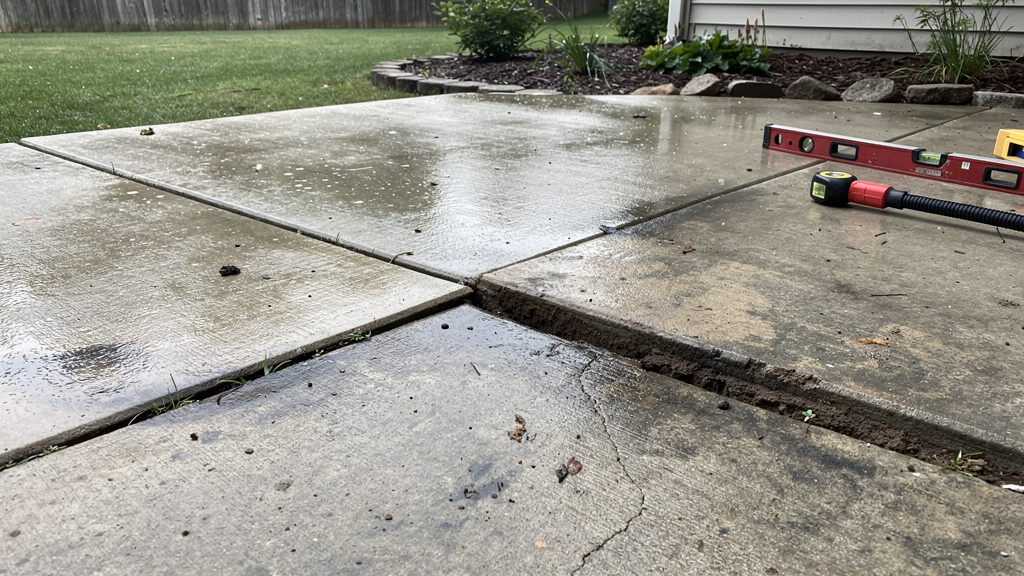
A sunken patio can make furniture wobble, send water toward the house, and create a sharp trip edge. The concrete is rarely the only thing to examine. Soil settlement, poor compaction, tree-root movement, edge erosion, downspout discharge, and changes in the surrounding yard can all affect the slab.
Start with the symptoms
After a rain, mark where water remains and how long it takes to drain. Look at the door threshold, steps, lawn edge, downspout, and any joint between patio sections. A low patio beside the house deserves particular attention because repeated moisture at the foundation or door can cause problems beyond the slab.
| Patio symptom | What it can indicate | Useful observation |
|---|---|---|
| One corner is low | Local settlement or edge loss | Is soil missing below the outside edge? |
| Whole patio pitches toward house | Original grade or broad settlement | Does the low direction match the surrounding yard? |
| Cracks radiate from a tree or edge | Movement or unsupported area | Are roots, erosion, or water visible nearby? |
| Patio rocks underfoot | Void below the slab | Does the panel move when stepped on? |
Repair paths
Address drainage first
Move downspout discharge away from the patio, correct obvious surface flow, and keep the edge from washing out. Do not create a new drainage problem for the neighboring property. If the patio is already low, drainage work may need to be planned with the slab repair.
Lift a stable panel
Professional lifting, such as concrete mudjacking for a settled patio, may work for an intact, accessible panel with a repairable void. The void and the water source still matter. Lifting a cracked or heavily spalled panel can produce a short-lived result or leave the surface unsafe.
Replace a section
A panel that is badly cracked, broken at the edge, or too damaged to support lifting may be better removed and replaced. The replacement should reconnect to steps, doors, and adjoining walks without creating a new height problem.
Rebuild the patio
If several sections are low, drainage is poor, and the base is unstable, rebuilding may provide more control. That can also be the right time to change the layout, add a walk, improve the finish, or make the patio easier to furnish.
A safe homeowner checklist
- Photograph the entire patio and close-ups of the low area.
- Check downspouts and roof runoff during rain.
- Note whether the surface moves, rocks, or has a trip edge.
- Keep people off broken or unstable areas.
- Do not try to lift a slab with improvised jacks or digging next to the foundation.
If water is the main symptom, also read why does water pool on my concrete patio?. If you want a project-specific assessment, call 414-219-1661.
Need a second opinion on the concrete?
Call 414-219-1661 or send the details through the quote form below.